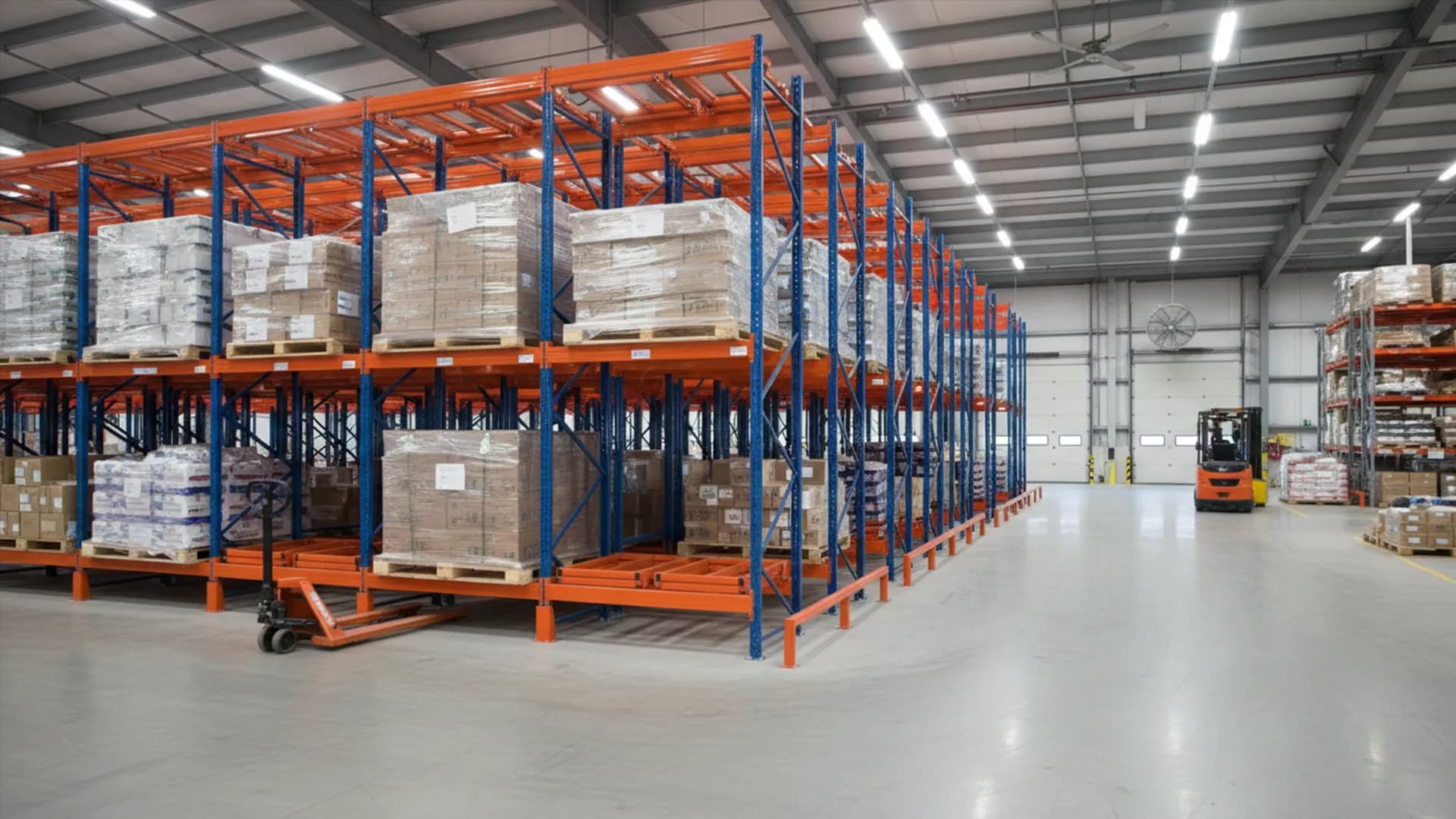
You need deep lane storage, but you hate repairing damaged uprights from clumsy drivers. Pushback racking keeps the forklifts in the aisle while the gravity carts do the work. Protect your steel and pack more pallets into your San Antonio, TX facility.
- ✓Facilities tired of constant rack repairs
- ✓High-density staging zones
Do not drop heavy pallets into a pushback system in San Antonio without verified load rating documentation. The Development Services (DSD) will fine you heavily if you overload your steel. Contact them directly at (210) 207-1111 or stop by 1901 S. Alamo St, San Antonio, TX 78204 to secure your permits near Fort Concho National Historic Landmark | A remarkably preserved 1867 frontier army post. The city mandates that the momentum from rolling pallets will not exceed your building's structural seismic threshold.

Optimizing Vertical Clearance with Low-Profile Carts
We protect your valuable vertical space by utilizing low-profile cart designs that minimize the lost clearance in each bay. Our layout specialists measure your exact pallet heights and ceiling constraints to ensure you maintain maximum storage density across every level.
Dynamic Thrust Load Calculation for Pushback Pallet Racking
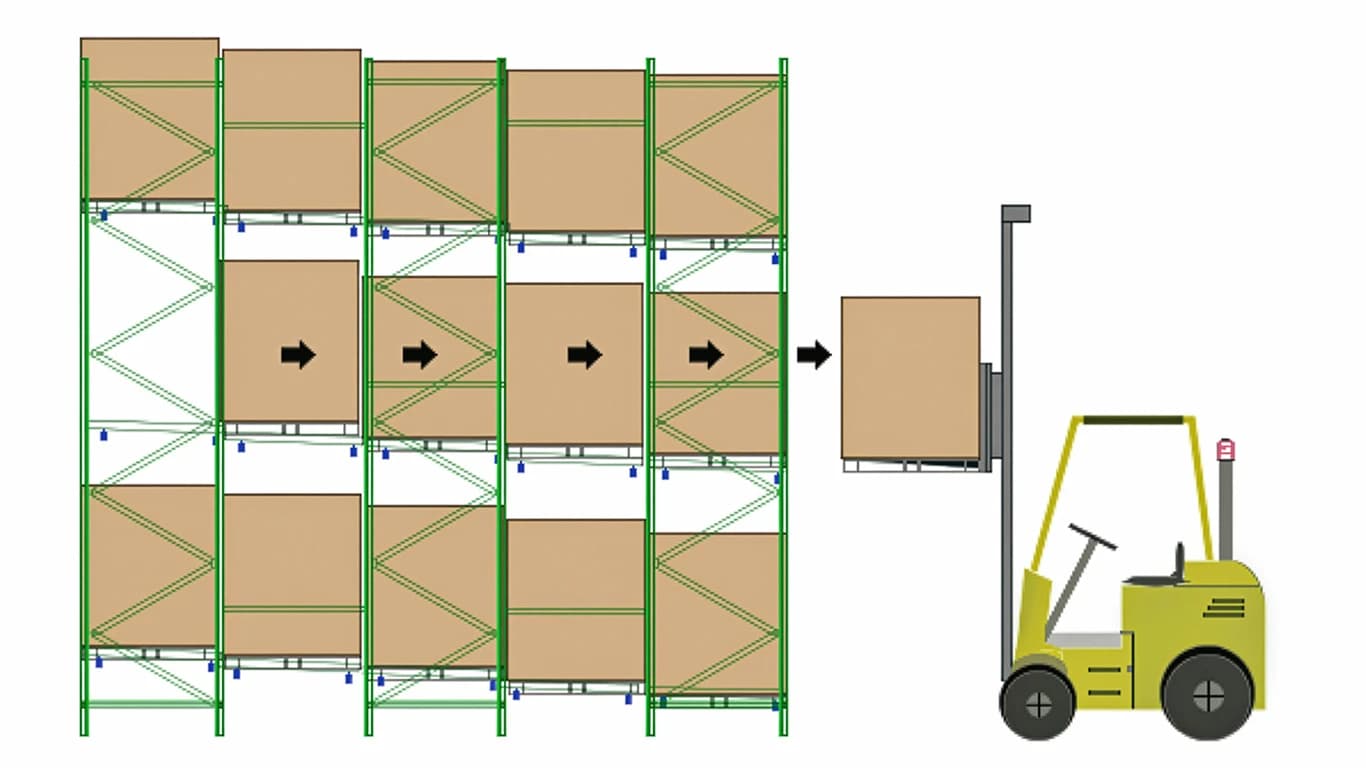
The structural viability of pushback pallet racking relies on neutralizing horizontal thrust loads generated when MHE forces nested carts up the inclined rail system. Engineering this gravity-fed architecture in a San Antonio facility necessitates reinforced rear strut bracing and heavy-duty frame anchorage to counteract continuous longitudinal kinetic force vectors.
- ✓Neutralize horizontal thrust loads via reinforced rear strut bracing.
- ✓Calculate longitudinal kinetic force vectors during MHE insertion.
- ✓Verify heavy-duty frame anchorage against inclined cyclic strain.
Technical Inquiry: Q&A
Question
"Can standard roll-formed uprights sustain the longitudinal thrust generated by a 6-deep Pushback Pallet Racking configuration in San Antonio, TX?"
Gavin Preston Warehouse Storage & ROI Consultant
Generally, no. A 6-deep pushback configuration exerts massive localized longitudinal thrust during the MHE insertion sequence. This dynamic loading mandates the use of structural steel C-channel uprights and reinforced back-strut lacing to neutralize the continuous kinetic force vectors.
We Handle the Heavy Lifting in San Antonio
You shouldn't have to stress over aisle clearances or cart depths just to store more product. We make the entire process easy and stress-free for businesses throughout TX. Give us a call today for a completely free consultation.
Pushback Cart Maintenance FAQ
Q: Do the pushback carts jam up in San Antonio warehouses?
Q: Is pushback safer than drive-in racking?
Q: What happens if a pallet breaks on the cart in my San Antonio facility?
Related Warehouse Products in San Antonio
Explore similar racking configurations tailored for local warehouse installations.
Selective Pallet Racking
Certified selective pallet racking solutions for facilities in San Antonio, TX.
Shelving
Certified shelving solutions for facilities in San Antonio, TX.
Teardrop Pallet Racking
Certified teardrop pallet racking solutions for facilities in San Antonio, TX.